Case study · Part 2
How retirement modernization became real.
By Yat Choi
100,000 applications.
That was the number we saw when we logged into the Online Retirement Application (ORA) on New Year’s Day 2026.
The day before, we found ourselves making bets with Retirements leadership at OPM about whether we’d cross the milestone before midnight. That kind of conversation would have been hard to imagine just a few months ago.
The first digital application we received last August was nerve-wracking. By January, things felt different, more settled into operation and routine.
It wasn’t just the technology or the process. Somewhere along the way, the energy in those rooms had changed too.
OPM recently announced a series of major milestones in retirement modernization. What follows is a behind-the-scenes look at the people, technology, and operational work that made this possible.
In just the first few weeks of 2026, we were preparing to upgrade this digital platform with another major shift. Retirement applications would no longer just be entering the system electronically, adjudicators themselves would soon begin reviewing and processing cases online as well.
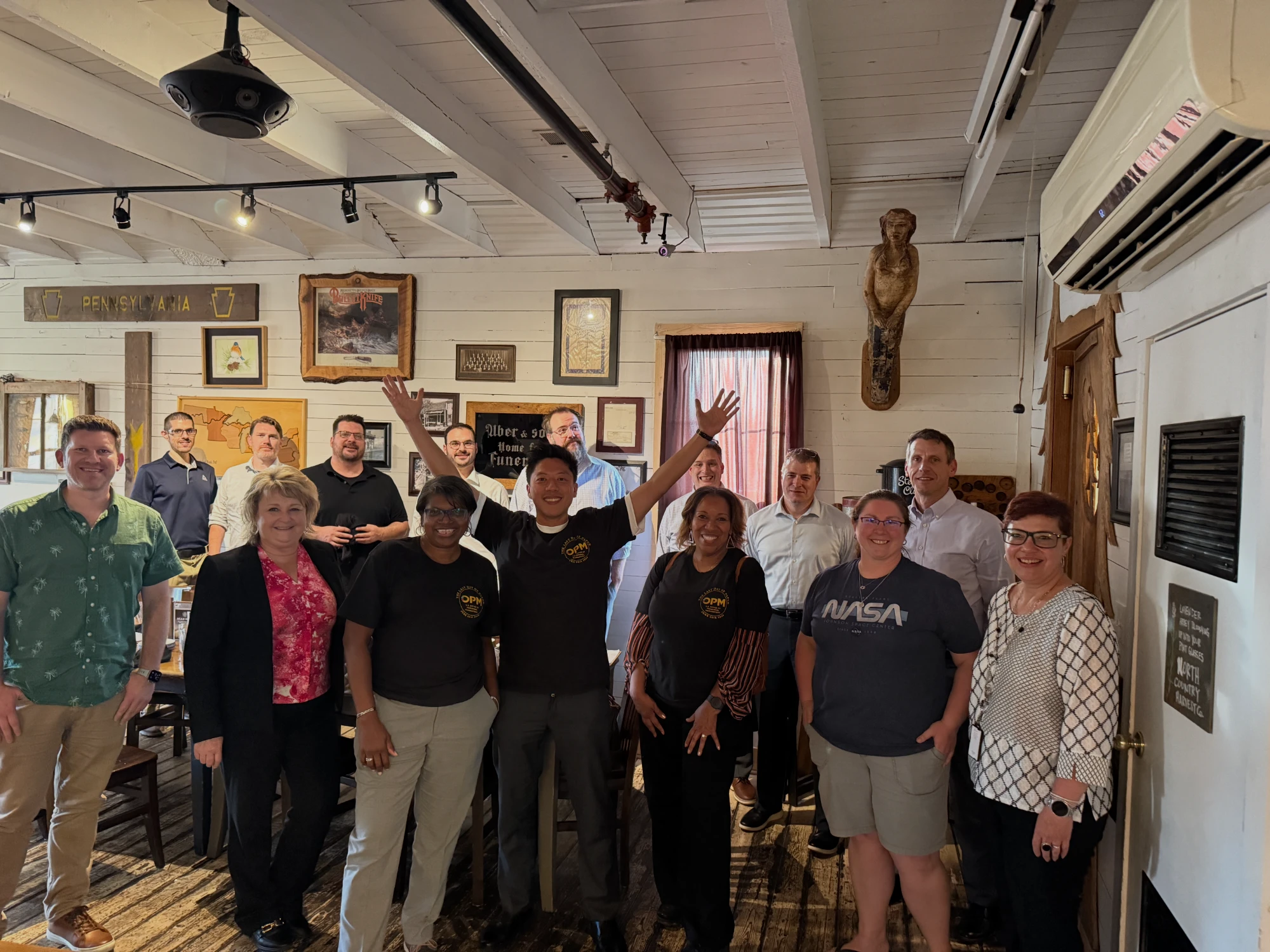
At this time, I was spending more and more time embedded alongside the Operations team. Years of product and design work had taught me that rebuilding systems like this from a distance rarely works. The only way to truly understand retirement processing was to sit with the people actually doing the job.
I spent months meeting regularly with retirement adjudicators, both virtually and inside the Mine itself, learning how the adjudication and review process actually happens day to day. The deeper I got into it, the clearer it became that modernization was not simply a software challenge. It was also an operational one.
What emerged from those sessions was not just software, but a much deeper understanding of the process itself. That understanding shaped nearly every product decision we made. With the help of talented designers, and ideas that came from everyone in those rooms, we set forth to redesign a smoother and more streamlined review tool. Some improvements involved automation and AI-assisted review. Others were surprisingly simple. One button eliminated hours of manual data entry. Another made it easier to compare documents side by side. Small changes, but the kinds of things that added up over thousands of cases.
This new review system went live over the weekend of January 12. By Monday morning, adjudicators who had spent decades working with paper files were processing retirements fully online.
Behind the scenes, this cutover involved a highly collaborative three-day war room that I ran alongside the OPM Development and Operations teams. Our initial platform launch taught us how fragile large-scale data migrations could be, where even small inconsistencies could create downstream issues that took months to fully uncover and repair. This time, with more hands on deck, we migrated tens of thousands of active retirement cases into the new review system, with no cases lost in the process.
The relationship between our teams evolved through this effort. From the beginning, the outcome we aimed for was that OPM could adopt, operate, and sustain this work long after our involvement ended. We included the in-house development team early and often throughout the build process. By the time this part of the system launched, developers who had initially approached the platform cautiously were starting to contribute bug fixes, operational support, and developing large scale features alongside us.
Bringing the review operation online dramatically reduced processing times and gave the Operations team a much stronger ability to manage the retirement backlog they were facing.
It also delivered something equally important: for the first time, the platform and overall operation felt stable enough for us to seriously pursue the more ambitious goal of automated retirement processing.
Automated “Instant” Retirement
Last year, we wrote about the possibility of “Instant Retirement” — the idea that certain retirement cases could move into pay immediately without waiting through the traditional review process. In some cases, no adjudicator would need to manually review at all.
Making that idea operational required another deep phase of collaboration with teams across OPM.
A dedicated task force of expert adjudicators worked alongside me throughout the process, helping determine whether the retirement packages we generated digitally could truly be trusted to support immediate temporary pay decisions.
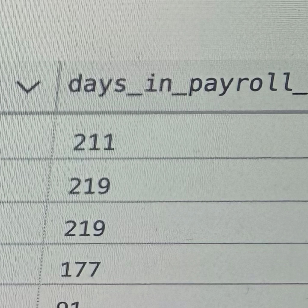
One of the biggest breakthroughs was realizing that many retirees were spending weeks, sometimes months, waiting on external payroll offices before OPM could even begin moving their case forward. By sourcing much of that information internally, we were able to eliminate entire stretches of waiting that had historically existed outside OPM’s direct control.
Proving that this could work safely in practice required months of deep collaboration and iteration. Together, we worked through edge cases, tested calculations, compared outputs, and refined the process over and over again. Sometimes the differences came down to just a few dollars, but even small discrepancies matter.
The work was painstaking at times, but with each iteration, confidence in the system grew stronger, from leadership all the way down to individual adjudicators in the Mine.
On the technical side, we found equally valuable partners with the “OG wizard” developers of OPM’s Mainframe systems. Together we created an integration for our modern platform to place applicants into pay automatically.
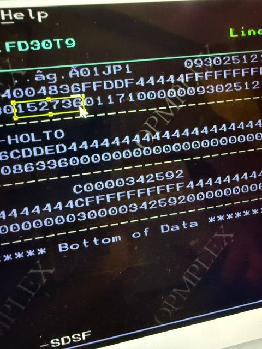
This was painstaking in a different way, as we spelunked through ancient COBOL code, cryptic file formats, and black-screen terminal views.
Eventually, what began as a technical prototype became operational reality.
On April 1, we were able to completely eliminate the wait time for authorizing Instant qualifying applicants into pay. With OPM’s systems connected, and estimates self-sufficient enough, our first qualifying retiree was put into pay status on the day they retired.
By June, this number grew to hundreds of cases. What had started as an effort to accelerate retirement processing had become something more ambitious: automated retirement decisions for routine scenarios.
While these cases represent only a portion of the overall retirement workload, they allow adjudicators to focus their expertise where it matters most: complex cases that genuinely require human judgment.
As a result, on June 30, 2026, OPM announced that it would no longer accept paper into the Mine. OPM was also able to guarantee that every healthy application submitted digitally would be processed within seven days, rather than months. For cases that qualify as Instant, they get processed immediately.
Appreciations
This work would not have been possible without the retirement services experts and adjudicators who invited us into their world and patiently helped us understand the realities of retirement processing. Their expertise shaped nearly every major decision we made.
Before all of this, I want to thank Dennis Li, who helped stand up the original Online Retirement Application and co-authored Part 1 of this story. Much of the foundation we built together carried forward into everything that followed.
We are deeply grateful to the OPM Development team, whose partnership helped operate, improve, and ultimately take ownership of the platform as it matured. We’d also like to extend a special thank you to the annuity calculation team and the Mainframe engineers who somehow continue to make decades-old systems do remarkable things. Together, these systems and integrations became the foundation for much of the online and automated experience.
Special thanks to the TechForce initiative and IRS Treasury, who volunteered engineers and HR staff to help us build and pilot Pre-retirements on an accelerated timeline.
We are also deeply grateful to the designers who helped shape these experiences. Jordan Samson, Gabe Valdivia, and Marimar Cabrero each brought an incredible amount of care, creativity, and empathy to this work. Together, we spent countless hours exploring ideas, refining interactions, and searching for ways to make retirement feel more approachable. Their fingerprints can be found throughout the original retirement application experience, including the step-by-step “Wizard Mode” redesign, the online review system, and most recently, Pre-retirements.
Thank you to the Retirements leadership at OPM for their trust, support, and partnership throughout this journey. Together, we were able to turn ambitious ideas into operational reality.
We are especially grateful to Director Scott Kupor, whose leadership and belief in the possibilities ahead helped create the environment where new ideas could take root and grow. His encouragement to embrace technology and challenge long-standing assumptions made many of these milestones possible.
Finally, thank you to Joe Gebbia. Long before this work began, he taught me to spend time with the people closest to a problem, to obsess over the details and keep pushing one level deeper in pursuit of something simpler and more intuitive, and to never lose sight of the human experience behind a product or story. I carried those lessons with me throughout this effort.
